
You caught a beauty!!!

************

************

************
Download PDF of scaffold here.
theory behind scaffold…
Many ESL teachers will question the importance of teaching and using classic literature in their classes. We probably all agree that it is not easy to teach in its authentic form as it demands a high level of language proficiency and maturity for any student, and especially those whose home language is different from that of the class text.
Nevertheless, through varied techniques, the reading of authentic classic literature is an incredibly enriching experience (although many of your students may not appreciate or admit this until years later!). Presented creatively, you may find that otherwise uninterested students will happily participate in activities that include:
- role-playing using their own scripts in colloquial language
- songs written with alternative endings of the plot
- debates on contentious concepts from the stories
- artwork that represents overall themes
These varied techniques are ways for students to be introduced to the stories and/or review and clarify details, so be able to interact with the concepts, philosophies, content more confidently.
The same scaffolding activity can be used as and introduction or review (perhaps with certain modifications) for summative evaluations. Below, we’ll consider a scaffolding activity designed for a summative assessment on the Greek myth Phaethon. We add here a Mini-Lesson which shows how the formative assessment leads directly to the summative assessment – virtually the same scaffolding activity used as an introduction and a review to the myth.
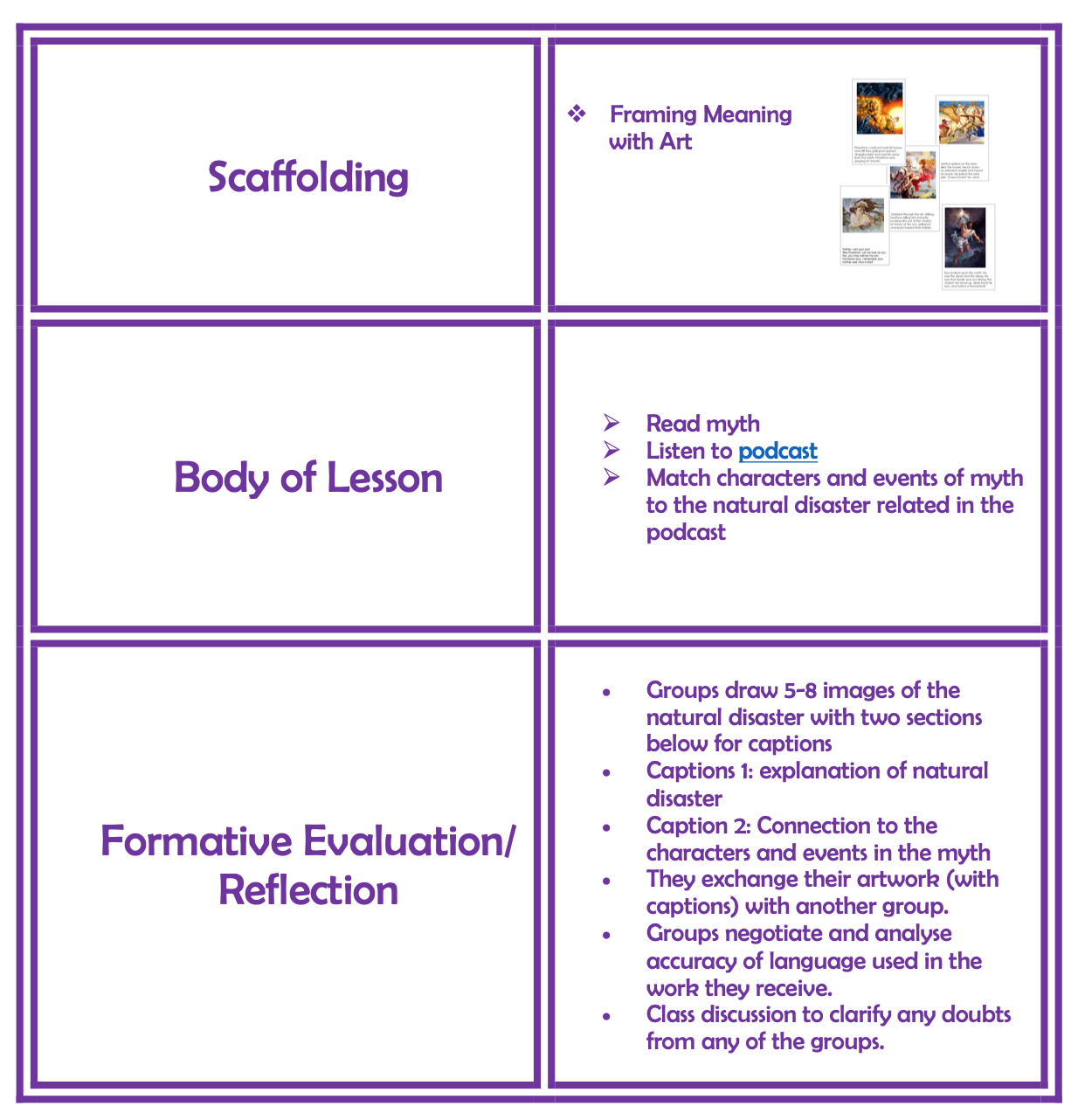
In the Scaffolding activity of the Mini-Lesson, first, students are given artistic renditions of the story by documented artists with captions underneath in authentic language. They put the images in order according to what makes sense to them with regard to images and language. The Body of the Lesson is to read they myth and listen to a podcast* in which notable scientists propose a theory that an historical global natural disaster was the genesis for the myth noted below. The Formative Assessment consists of creating their own images of 5-10 key points of the podcast, with two sets of captions – one explaining the natural disaster and the second connecting the characters and events to this natural disaster. In the best practices of the Ethic of Excellence, in groups, they then exchange their artwork (with captions) and analyse each other’s renditions. As a class, groups share doubts so as to arrive at a solid consensus of clarity and comprehension before they later take the summative assessment.
In this way, the scaffolding activity is used, with a few modifications, both as an introduction and review for the Body of the Lesson.
Mini-Lesson…
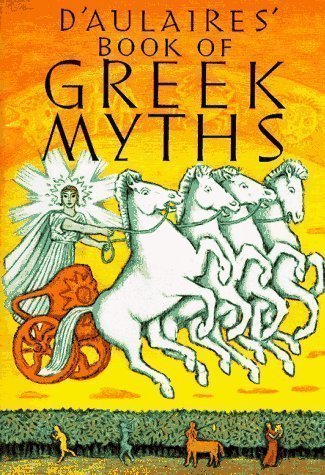
Greek Myths: ‘Phaethon’
step by step…
Knowing the Greek myths will help students in virtually all subjects and professions as they are referenced frequently either as metaphors, allegories, or as referencing symbols. Depending on the leaning of the lesson, they can also be used as historic breadcrumbs for real-life events. *
The story of Phaethon, for instance, is said to be a mythological telling of an ancient natural disaster that happened to the planet thousands of years ago. In that case, Phaethon is explained to be the symbolic interpretation of a comet that hit the earth and caused torrential destruction more than 12 800 years ago.
(*Listen to a fascinating podcast of Randall Carlson tying this myth to the possible verifiable proof of the existence of Atlantis as explained geologically in the writings of Plato. 1.50.00)
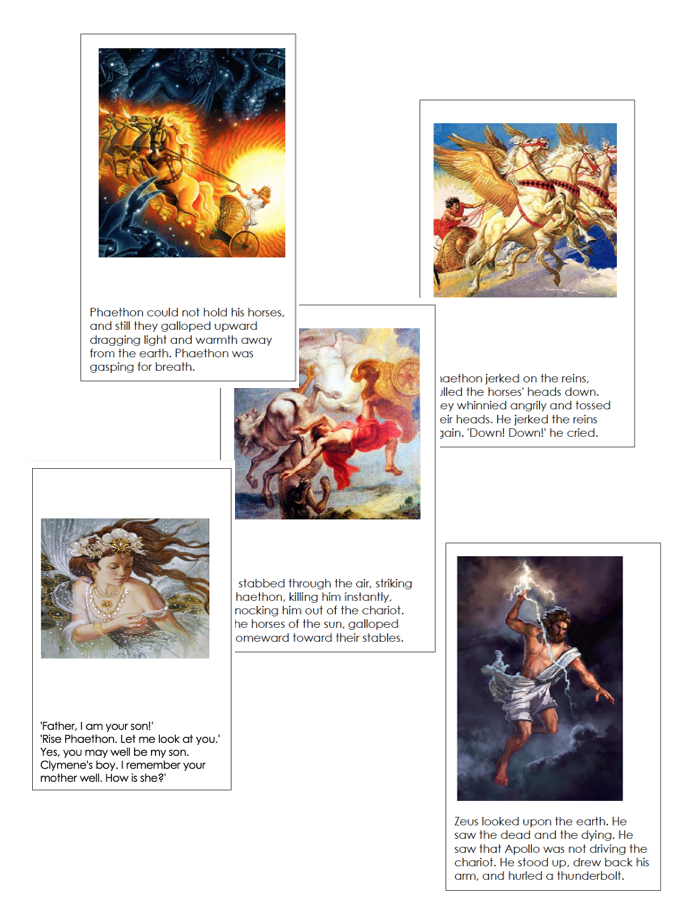
- Choose 10-15 images from the Greek myth that your students are going to read and place them in individual textboxes. (Whenever possible, use images from documented artists and make a separate list of these.)
- Underneath each image, include the authentic narration from the story. (See images on the right.)
- Print out sets for each pair or group of students (groups of 3).
- Using the clues from the images, and reading the sentences, groups put the images in the order they believe most faithfully retell the story. (Since they have not read the myth, at this point, there is no ‘correct’ order. If they can justify the order they’ve arranged the images in, it is ‘correct.’)
- Groups negotiate meaning of the story from the sentences under each image and the clues from the artwork. On a separate piece of paper they write their interpretation of the artwork and the story as they understand it so far, in their own words.
- From the list you’ve given them of the documented artists, group research the one of them and present information about the artist, and what s/he was highlighting in the corresponding rendition.

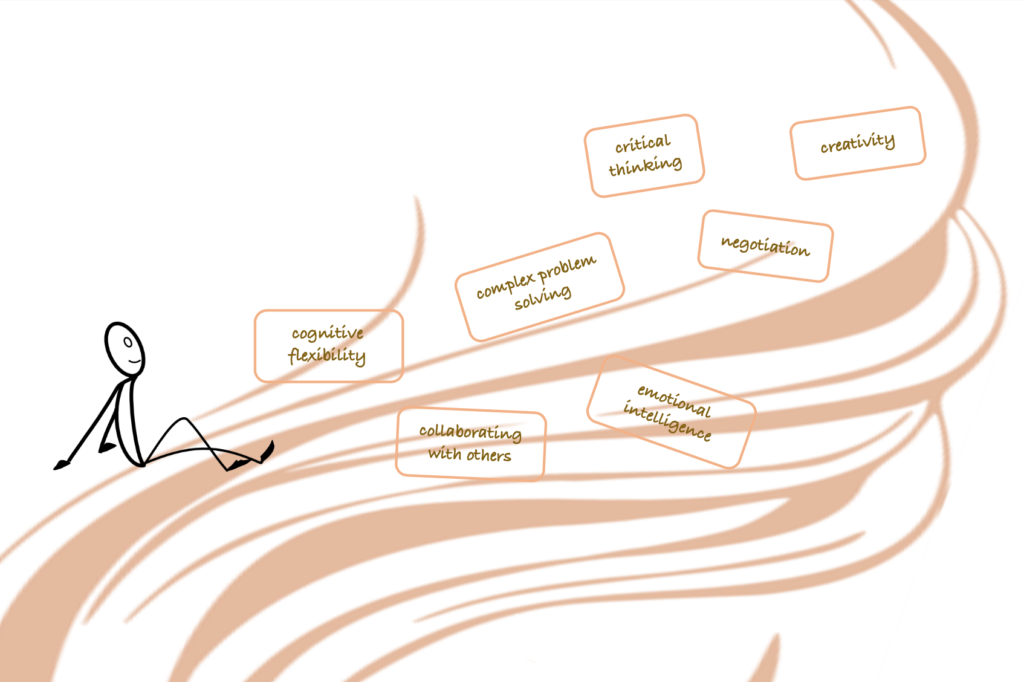
Scaffoldingmagic.com is your entryway into DYNAMIC bilingual learning methodologies, such as Phenomenon-Based Learning, CLIL, EMI, and ESL. You’ll find ways to implement critical thinking tools (DOK) to promote higher level thinking, the growth mindset, instill an ethic of excellence, deep reflection on learning, and all through multi-cultural, interdisciplinary activities. We have the keys to turning competences into action and to creating collective efficacy in your school so you move ahead as a unified, enthusiastic team.