
************

************

************
Download PDF of scaffold here.
theory behind scaffold…
Forty years later, in 2001, the United Nations voted to celebrate Yuri’s Night, which promotes public interest in space exploration and encourages young people to consider professions associated with space exploration and research. The day also aims to promote aspirations to explore and maintain outer space for peaceful purposes.
Let’s help students to consider the original motives behind space exploration – controlling direction and purpose of what is possible in space in the future. How important is that goal and is inner exploration more meaningful?
There is also the wider issue of whether space exploration merits the contamination caused by the machinery sent into space precisely because of the satellites sent to analyse and explore. It behooves us to examine the damage we’re causing in the universe in large part because of the consequences of the damage we’re causing to the Earth.
step by step…
Part 1:
- Project the following image on the white board or give it to each group of students.
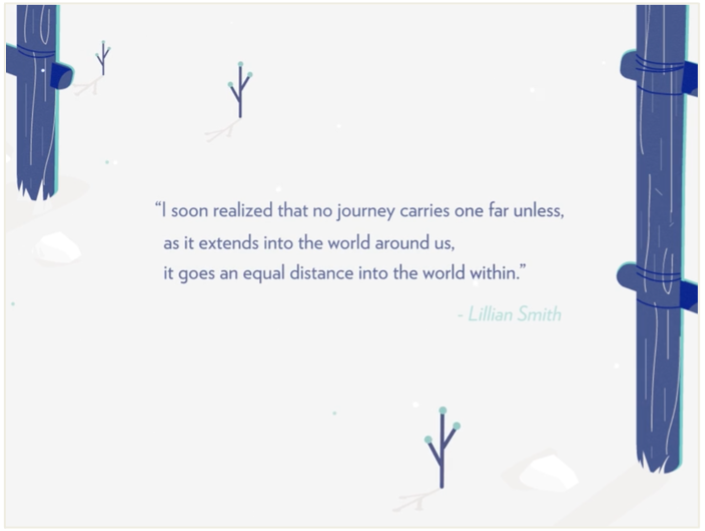
- Ask students to discuss the following:
- What does the statement in the image mean?
- Define the word ‘exploration’.
- What is space?
- Where is space?
- What is space exploration?
- How important is the exploration of outer space to you?
- How important is the exploration of your internal beliefs to you?

3. Watch video.
- Groups consider how the video presents exploration.
- Part 2:
- Hand out the transcript for the second video.
- In groups (of 3) students read the transcript and find 4-6 images that elucidate the information.
- Groups share their images and explain why they are appropriate.
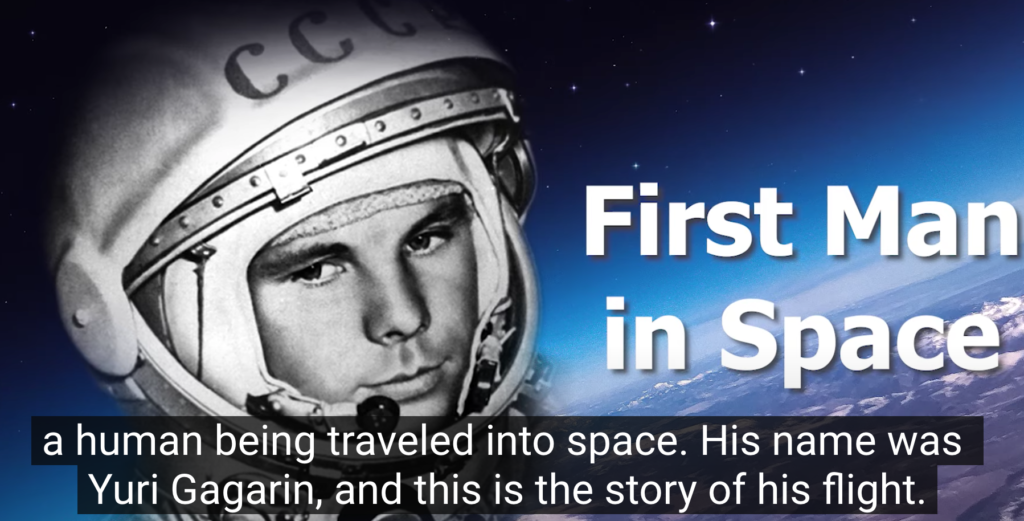
8. Watch video.
- Groups comment on which images – from their own group or others – helped them to understand the video more easily.
- Part 3:
- In pairs, students make a list of: Column 1: material objects sent into space; Column 2: how long these material objects stay in space; Column 3: What energy it takes to send these objects into space and/or bring them back; Column 4: other debris that is in space due to human interaction.
- Students make conjectures about how many launches have been realised since 1957, how many of those have failed, and what the consequences have been and are to the natural state of space.
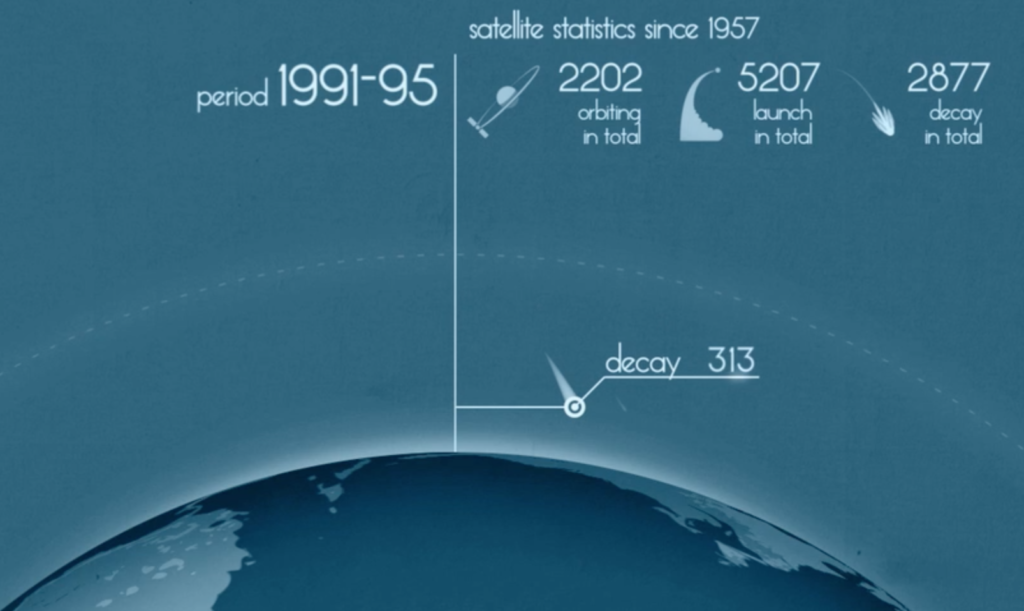
12. Watch video.
- Formative Evaluation/Reflection: In groups, students answer the following questions based on the Question Continuum.

- Would you like to work in the space industry in some capacity?
- Which parts of the spacecraft were not included in Yuri Gagarin’s flight?
- Who was the first person to orbit the Earth and from which country?
- When was the first space flight with a human passenger?
- Where is space?
- What does is mean to explore something?
- How do spaceships work?
- Why do animals have the desire to explore their environments?
- What if you won a two-month stay at a space camp, but it coincided with your end-of-the-year trip with your classmates. How could you participate in both?
- What are the consequences of satellites sent to space?
- How can we justify the launching of satellites and other machinery into space?
find more scaffolds here…
more relevant videos…
Stephen Hawkins: Big Ideas Made Simple
A Brief History of Us by Lucy Hawking

Scaffoldingmagic.com is your entryway into DYNAMIC bilingual learning methodologies, such as Phenomenon-Based Learning, CLIL, EMI, and ESL. You’ll find ways to implement critical thinking tools (DOK) to promote higher level thinking, the growth mindset, instill an ethic of excellence, deep reflection on learning, and all through multi-cultural, interdisciplinary activities. We have the keys to turning competences into action and to creating collective efficacy in your school so you move ahead as a unified, enthusiastic team.