
You caught a beauty!!!
************

************

************
Download PDF of scaffold here.
theory behind scaffold…
Many ESL teachers will questions the importance of teaching and using classic literature in their classes. We probably all agree that it is not easy to teach in its authentic form as it demands a high level of language proficiency and maturity for any student, and especially students those whose home language is different from that of the class text.
Nevertheless, through varied techniques, the reading of authentic classic literature is an incredibly enriching experience (although your students may not appreciate or admit this until years later!). Presented creatively, you may find that otherwise uninterested students will happily participate in activities that include:
- role-playing using their own scripts in colloquial language
- songs written with alternative endings of the plot
- debates on contentious concepts from the stories
- artwork that represents overall themes
These activities are ways for students to review/clarify details of the stories and so be able to interact with the literature more confidently.
The same scaffolding activity can be used as and introduction or review (perhaps with certain modifications) for summative evaluations. Below, we’ll consider a scaffolding activity designed for a summative assessment on Shakespeare’s ‘Twelfth Night’. We add here a Mini-Lesson which shows how in this case, the summative assessment becomes, in fact, a formative assessment: students are given the opportunity to to evaluate their knowledge before the final exam. They take a trial exam to test their knowledge on the subject, then, in the best practices of the Ethic of Excellence, they have the opportunity to correct their own divergent answers to construct them more cohesively.
These summative/formative assessments are adapted from Dylan Wiliam’s brilliant book Embedded Formative Assessments.
See how you can adapt this Mini-Lesson to your own needs.
Mini-Lesson…
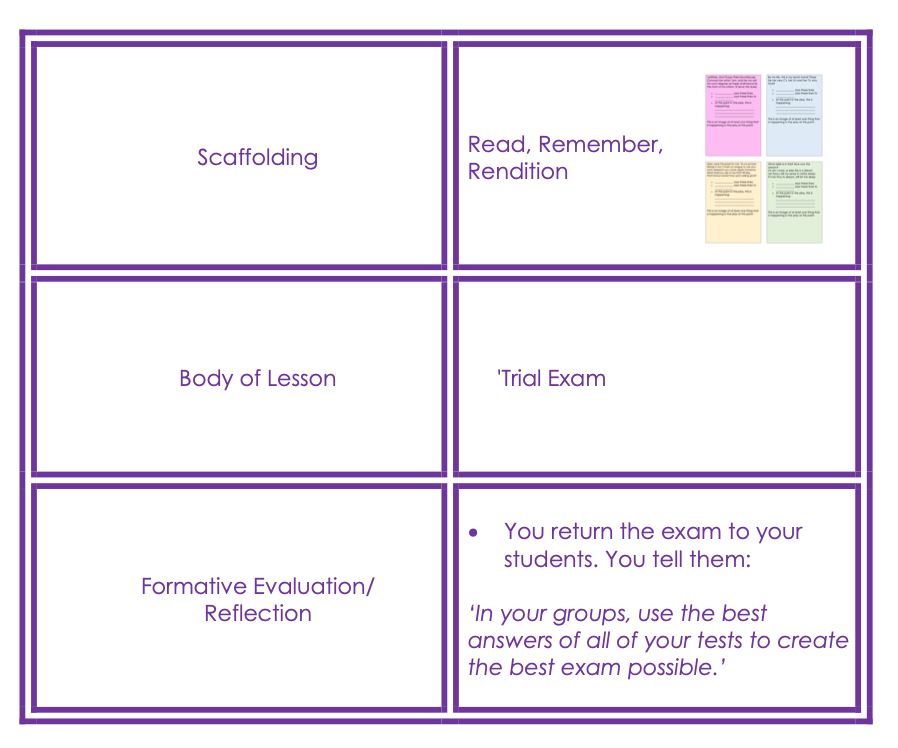
step by step…
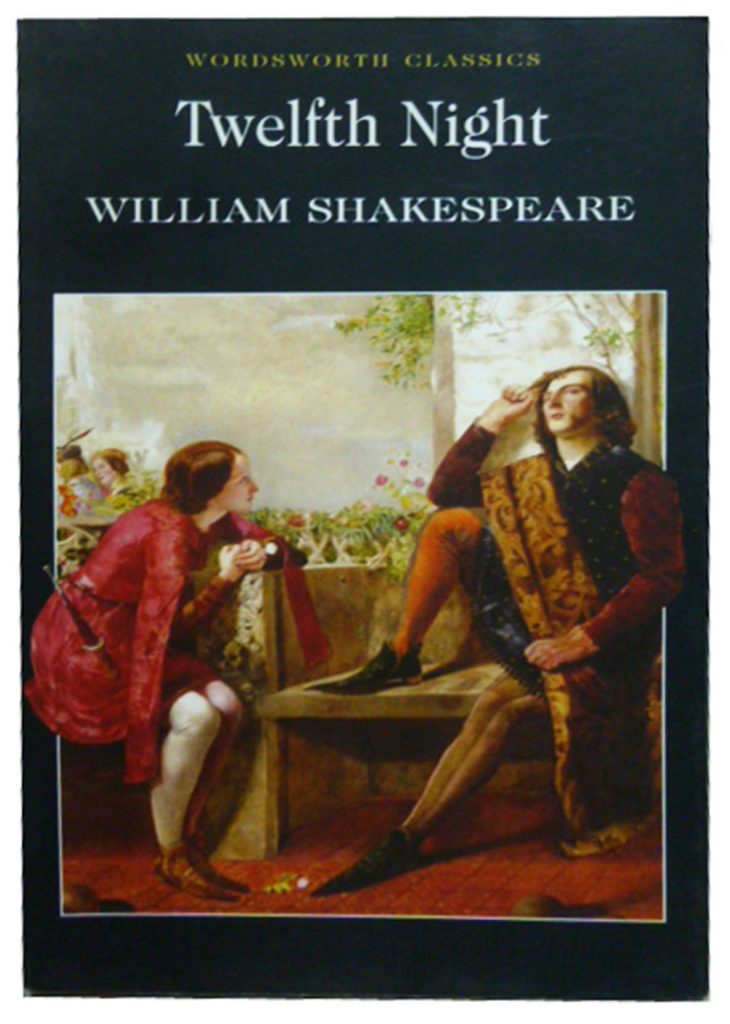
Shakespeare: Twelfth Night
There are many ways to present the plays of Shakespeare. Now there are many versions in colloquial speech, set to music, modern versions, etc.
All of these are valuable and whichever one engages your students, it’s the right one to use!
This activity focuses on the purity of Shakespeare’s language. Let the students roll it around in their mouths and feel the strangeness and how satisfying it is when they can finally pronounce some of the dialogue.
The summaries in the activity act as ‘translations’ from Shakespearian English to more colloquial. The artwork adds more disciplines, learning styles, and so will engage more students.
- Choose 5-10 quotes from the play you’ve been reading.
- Place them in text boxes. Add spaces for students to identify who is speaking, to whom, and what is happening at that point in the play.
- Include one space at the bottom for students to draw one element of the scene that is taking place when that dialogue is being spoken. (See examples at the right.)
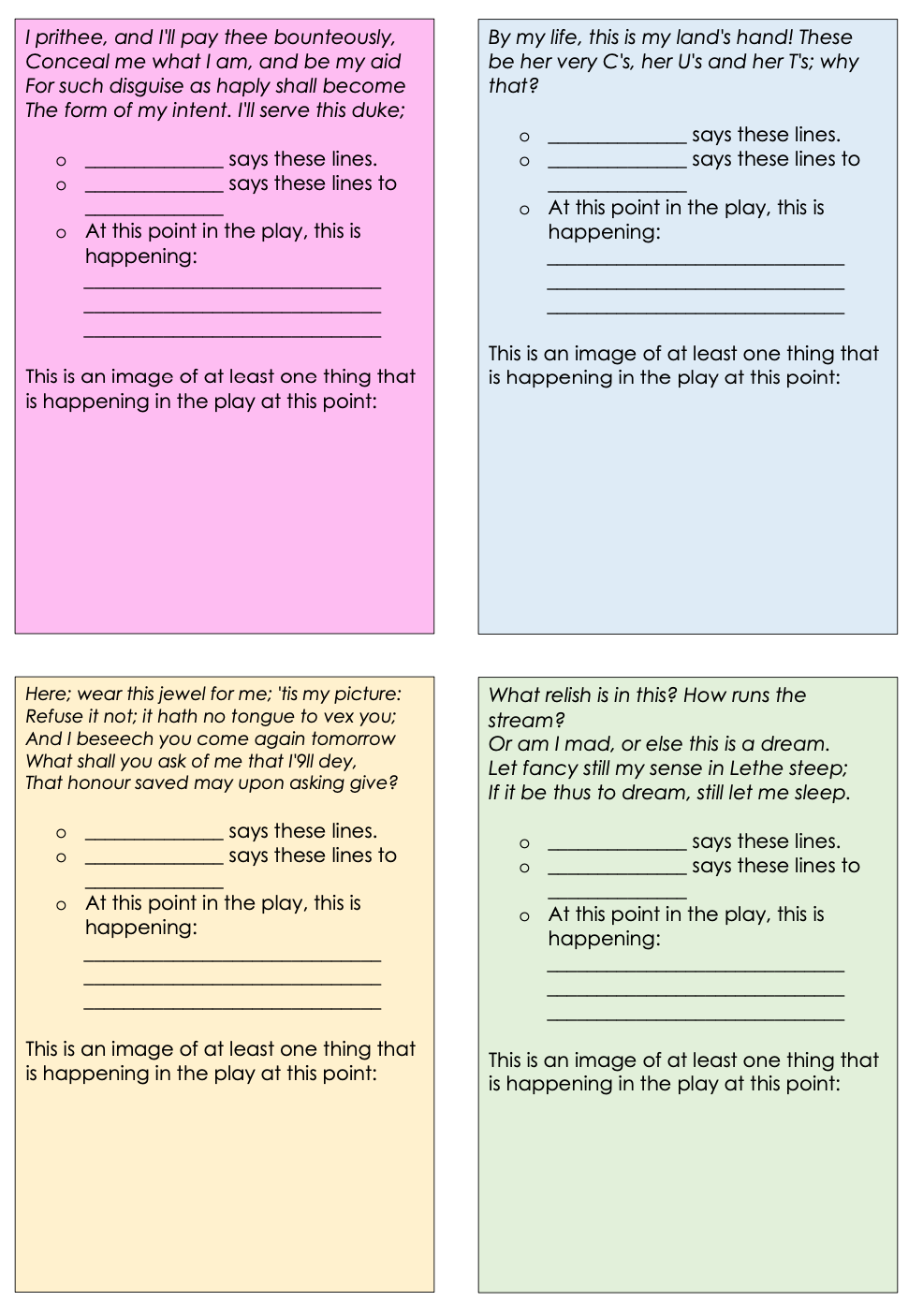
- Print out sets and give one to each group.
- Groups identify who is speaking, to whom, and what is happening in the play at that point.
- Groups draw one element of the scene that is being targeted in that text box.
- Groups draw one of their illustrations on the board and the class identifies which text box is being represented. The class as a whole reaches a consensus as to the details of each text box.

Scaffoldingmagic.com is your entryway into DYNAMIC bilingual learning methodologies, such as Phenomenon-Based Learning, CLIL, EMI, and ESL. You’ll find ways to implement critical thinking tools (DOK) to promote higher level thinking, the growth mindset, instill an ethic of excellence, deep reflection on learning, and all through multi-cultural, interdisciplinary activities. We have the keys to turning competences into action and to creating collective efficacy in your school so you move ahead as a unified, enthusiastic team.