
You caught a beauty!!!
************
************

************
Download PDF of scaffold here.
theory behind scaffold…
Adding humour to a lesson is always a recipe for success. Humour changes the dynamic of the class and helps students to see their lessons from a different frame of mind. This scaffold uses irony to help make potentially dry material more inviting and accessible – irony being the highest form of humour.
Of course, there is very little ‘dry material’ in Pre-School classes, especially since Pre-School teachers bring so much energy to virtually anything you do in the classroom. Nevertheless, it’s always nice to remember that we can present new information in a variety of ways to keep our little learners on their toes! (I grew up with an entire extended family who thrived on challenging all its members – from the eldest to the youngest – through ironic statements and very straight faces. I believe that helped me question everything in a very healthy way!)
Humour is very cultural. American humour, for instance, is binary and is either present or absent. In the Far East, on the other hand, one encounters a wide spectrum of subtle degrees of humour that are commonly present.* In cultivating global citizens, it is important that our students know the differences of humour in different cultures – between irony and simpler forms of humour – so that they can react to it appropriately. It’s yet another way of getting to know the people around us in this interconnected world.
On a more colloquial level, humour brings enthusiasm, positive feelings and optimism to the classroom. Irony generates cognitive activity and changes the dynamic of the class. Using humour and irony in conscientious ways will help students to see their lessons from a different frame of mind; once they are more relaxed, you can have more meaningful verbal exchanges about the topic at hand and assimilate new information more deeply.
In putting this activity together, you’ll have the opportunity to have fun with language. You’ll prepare images from a lesson, song, or video that your students are about to interact with. You’ll prepare statements about the images that from one extreme of accuracy to another – logical to the absurd. It’s easier than you think, and your young learners will become much more adept at evaluating what they hear, instead of believing that everything they are told is the absolute truth. This creates critical thinkers from a very young age.
You’ll notice that there are no linguistics included in the activity. Developmentally, most scholars in the educational world agree that developmentally, children don’t need to read until they are 7-years old. Until then, we need to encourage them to develop their other skills and especially their creativity and critical thinking.
*Hall, Edward T. (1973). The Silent Language. New York. Anchor Books
step by step:
- Print out 10-15 images from a lesson, song, video you’re about to introduce. For each image, prepare different statements – from the appropriate to the absurd (ironic). (Download template of this example here.)
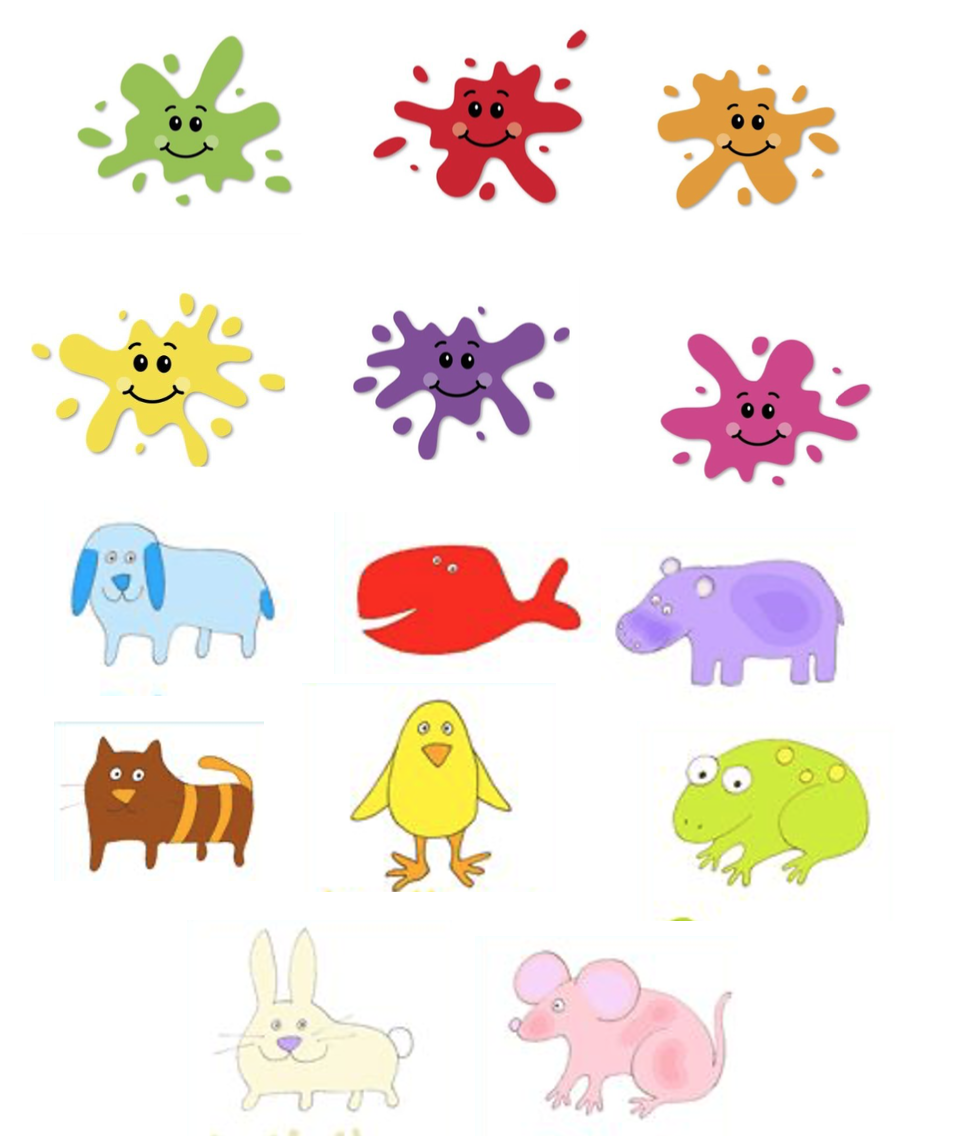
- Give each pair of students a set of the images.
- You lift up an image and make a statement about it. The pairs negotiate (whisper to each other) and one of them contradicts what you’ve said and states the truth more accurately.
Example:
- Teacher: I’m holding up the colour red. Please hold up the colour red from your set of cards. Let’s say this together: We’re holding up the colour red.
- Students: We’re holding up the colour red.
- Teacher: I’m holding up a red frog. Please hold up the red frog from your set of cards.
- Students: It’s a GREEN frog!!!
- Teacher: That’s more accurate. It’s a green frog. How clever of all of you to see the difference.
(Continue with this dynamic.)
- Formative Assessment: Project images from the unit on the white board and each group takes turns verbalising what they see, using the academic language they’ve learned from the scaffolding activity.
- Reflection: Students give you 3-4 words explaining how they’ve learned the information and tell you whether they thought it was amusing or not – and why.
video explanation…
?

Scaffoldingmagic.com is your entryway into DYNAMIC bilingual learning methodologies, such as Phenomenon-Based Learning, CLIL, EMI, and ESL. You’ll find ways to implement critical thinking tools (DOK) to promote higher level thinking, the growth mindset, instill an ethic of excellence, deep reflection on learning, and all through multi-cultural, interdisciplinary activities. We have the keys to turning competences into action and to creating collective efficacy in your school so you move ahead as a unified, enthusiastic team.