
You caught a beauty!!!
************

************

************
Download PDF of scaffold here.
theory behind scaffold…
Among all the different skills we present in our lessons, one of the most essential– understanding instructions – is mostly forgotten. And it’s essential. In pre-school, the students rely more on images than words – and that’s developmentally appropriate. Nevertheless, if we could begin at this age to help our students to understand the dynamics of instructions, we’ve done them a great service. We can set up activities so that they interact with images, and we verbalise the academic language that they’ll read and hear in their later studies. In this way, they will have already assimilated many of the peculiarities found in the wording of instructions, and that will give them a level of comfort that will help them in the long term.
The language used in written instructions – but also the language we use verbally when we are explaining an evaluation or assessment – is almost always very different from the words, phrases, terms and the structure of the sentences we use in day-to-day situations.
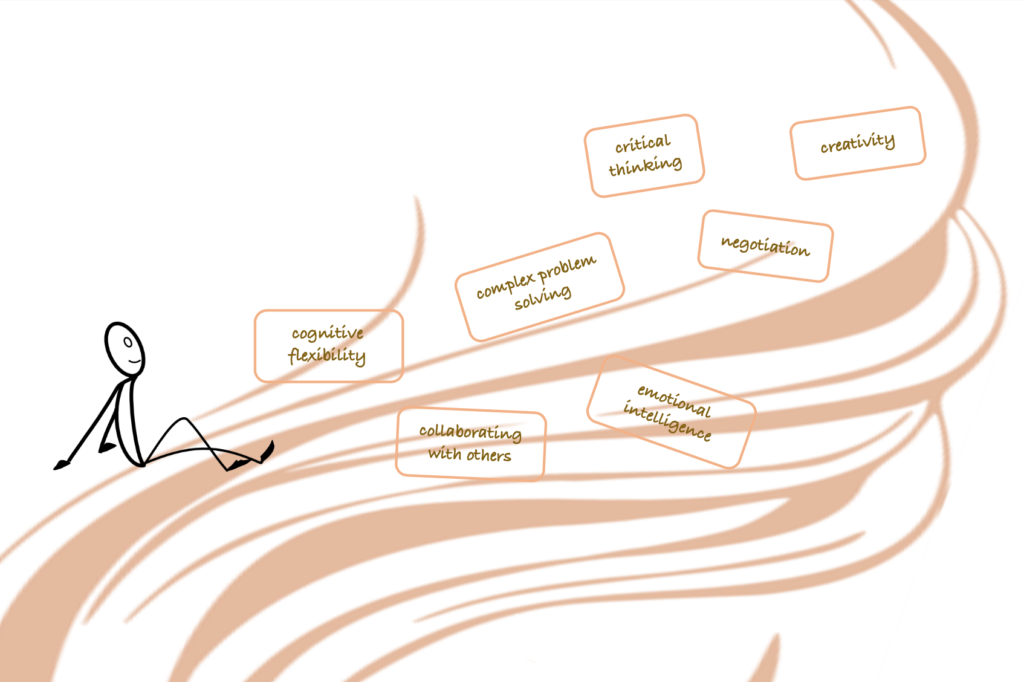
This scaffolding activity not only presents more sophisticated language that Pre-Schoolers will need to know in the future, but it is also a perfect way of creating inclusion in your classes; those students who need to move to be able to assimilate information, to speak, to use interpersonal skills, to touch and manipulate information, who need more visual clues, will enjoy this learning strategy. The scaffold promotes collaboration, critical thinking, and inferencing, many other essential 21st century skills. You’ll see how easy the scaffold is to adapt to your needs.
* Academic success ‘is intricately linked to higher-order thinking processes developed by extensive modeling and scaffolding of classroom talk and accelerated by weaving direct teaching of its features while teaching content concepts.’ (Zwiers, 2008).
Step by step…
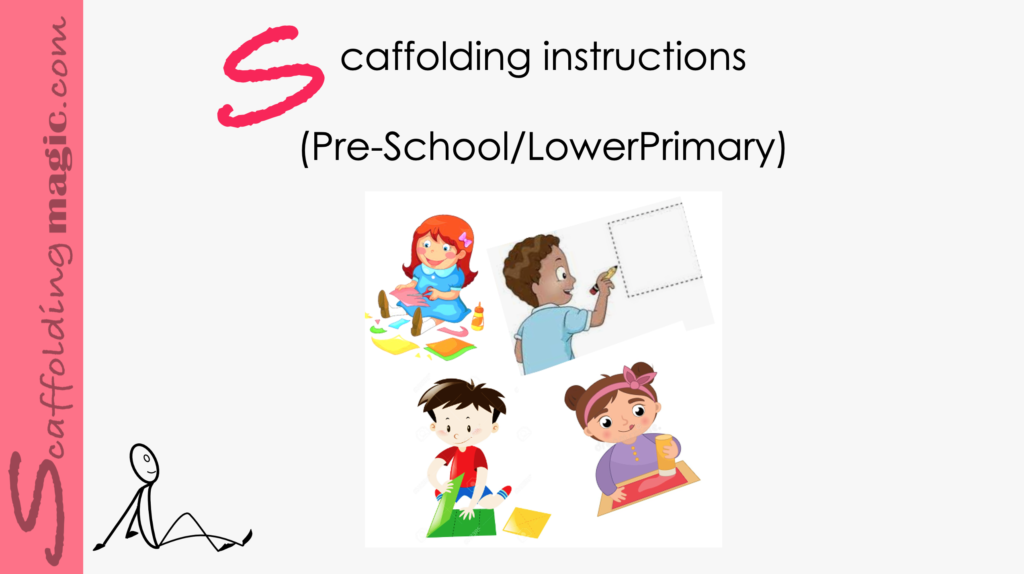
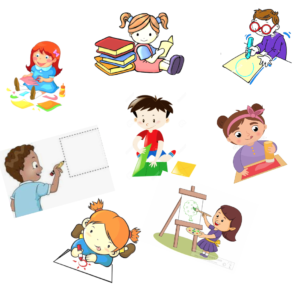
- Give your students a set of clipart that represents the instructions that they’ll have in their classwork and assessments. (Examples below and downloaded here.)
- In full sentences, use each of the words.
Suzanna is drawing the sun.
Padma is cutting a forest.
Chernice is glueing the trees.
- Students negotiate with their partners, choose the appropriate clipart and hold it over their heads.
- They look at what their classmates have chosen. They can say, ‘We have chosen the same drawing as _______ and ________ of Jose tracing a box.’ This helps the repeat and use the instructional vocabulary and also recognise their classmates, thus practicing social and cognitive skills.
- Continue until you’ve mentioned all the words.
- You can extend the activity by giving pairs of students turns at leading the activity
video explanation…

Scaffoldingmagic.com is your entryway into DYNAMIC bilingual learning methodologies, such as Phenomenon-Based Learning, CLIL, EMI, and ESL. You’ll find ways to implement critical thinking tools (DOK) to promote higher level thinking, the growth mindset, instill an ethic of excellence, deep reflection on learning, and all through multi-cultural, interdisciplinary activities. We have the keys to turning competences into action and to creating collective efficacy in your school so you move ahead as a unified, enthusiastic team.